
By 8 Gauge Wire 5172
Main Questions About 8 Gauge Wire
In electrical engineering and home projects, choosing the right wire size is very important. 8 AWG (American Wire Gauge) wire is a medium-thick conductor. It plays a key role in high-current applications. This guide explains the features, ampacity (current carrying capacity), and uses of 8 gauge wire. It will help you make smart technical choices.
Wire ampacity (Ampacity) means the maximum continuous current that a wire can carry safely, without making its temperature go above the safe limit. The unit is Amps (A).
This value is not fixed. It depends on conductor material, insulation type, ambient temperature, and bundling with other wires.
When current flows, resistance creates heat (I²R loss). Ampacity makes sure this heat goes out safely into the air. It prevents insulation damage or fire risk.
Ampacity has three key points:
The National Electrical Code (NEC) gives tables for different cases. Engineers and electricians use these as a design guide.
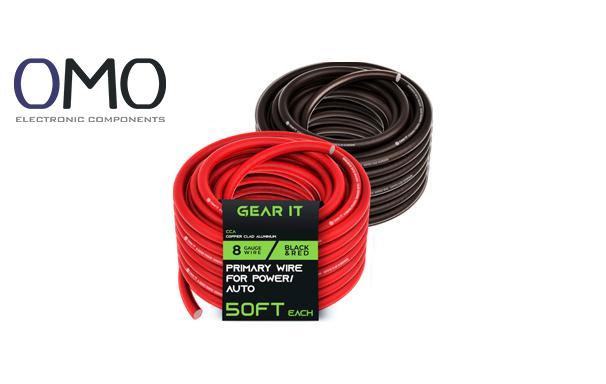
8 Gauge Wire (8 AWG) is a wire size in the American Wire Gauge (AWG) system. In AWG, a smaller number means a thicker wire. 8 AWG is medium-thick. It is between 10 AWG (thinner) and 6 AWG (thicker). It fits high-current uses.
8 AWG is a balance between size and flexibility. It carries more current than thin wires. But it is easier to install than very thick cables. This is useful in homes and commercial wiring.
8 AWG has standard physical size:
A bigger area means lower resistance. This reduces energy loss and heat. Insulation thickness may differ between brands, but conductor size must follow AWG rules.
8 AWG follows electrical laws. By Ohm’s Law (V = I × R), lower resistance means it can carry more current. Copper 8 AWG has resistance about 0.628 ohm/km.
By Joule’s Law (P = I² × R), lower resistance makes less heat. This allows safe power transfer. That is why 8 AWG fits medium-power uses, such as large home appliances or small industrial machines.
Based on NEC values, ampacity depends on conductor material and insulation type. Always check local codes.
| Application/Insulation | Copper (A) | Aluminum (A) | Notes |
| Typical at 60°C | 40 A | 30 A | Old wiring or 60°C insulation |
| Typical at 75°C | 50 A | 40 A | Most common rating |
| Typical at 90°C | 55 A | 45 A | For equipment, not breaker rating |
| For equipment, not breaker rating | 40–50 A | Not common | Breaker ≤ ampacity |
This shows: when insulation rating goes from 60°C to 90°C, copper ampacity rises from 40 A to 55 A (+37.5%). Better insulation means better performance.
For copper, 8 AWG is usually used for 40 A or 50 A circuits, depending on insulation and installation. For aluminum, 30 A or 40 A.
The breaker rating must be ≤ wire ampacity. For example, a 50 A copper 8 AWG needs a 50 A breaker or smaller. The breaker trips first if current is too high. This protects the wire.
Insulation decides environment, temperature, and amp rating:
High-quality insulation like XLPE (cross-linked polyethylene) resists heat and lasts longer.
Two main materials:
Copper is better in conductivity, oxidation resistance, and strength. It costs more but is safer and more reliable long-term.
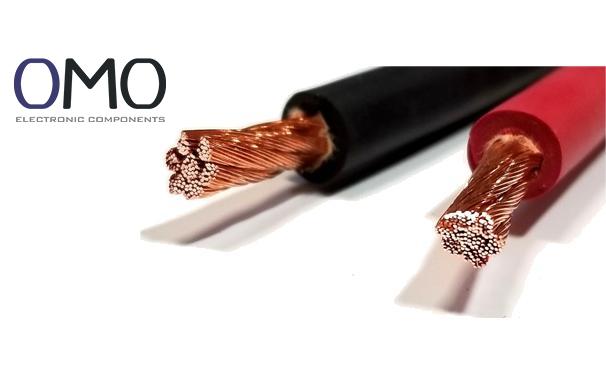
High air temperature makes cooling harder. Ampacity must go down. At 40°C, NEC says reduce to ~90% of normal. Important in attics or outdoors.
If more than 3 current-carrying wires are bundled, ampacity drops by 20–30%. This prevents overheating in dense conduits.
Long runs cause voltage drop. Ampacity does not change, but thicker wire may be needed to keep voltage drop <3%. For 8 AWG, max length at 50 A and 120V is ~15 m. Beyond that, use thicker wire.
Insulation temperature rating (60°C, 75°C, 90°C) sets max safe heat. Higher rating allows higher ampacity. But breaker size still follows lowest-rated device.
8 AWG is used in many cases:
For EV charging, 8 AWG supports faster charging than 10 AWG, without the difficulty of very thick cable.
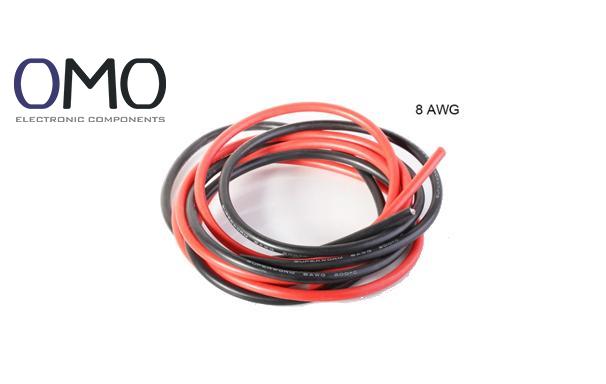
All wiring must follow NEC or local code. Codes set the minimum safe rules. They update often with new research.
Choose breaker size by wire ampacity, not by device power. For example, 50 A 8 AWG wire needs a 50 A breaker, even if the device uses less.
All lugs, screws, and wire nuts must be rated for 8 AWG. Aluminum wire must use CO/ALR terminals or anti-oxidant paste to stay safe.
8 AWG and thicker wires are risky. They carry high current and voltage. A licensed electrician should do installation or changes. This ensures safety, performance, and reliability.
For a 50-amp load, 8 AWG copper wire can span approximately 115 feet on a 240V system (or 57 feet on a 120V system) while maintaining a 3% voltage drop. These distances are approximations and are subject to the wire's insulation type, temperature rating, and applicable local electrical codes.
When the current in a wire exceeds its ampacity, overheating occurs. This can result in degraded insulation, short circuits, and poses a significant fire risk.
For an 8-gauge wire, the safe amperage capacity ranges from 40 to 55 amps. This maximum current is determined by the wire's insulation and its temperature rating.
Yes, 8-gauge wire is perfectly sufficient for a 30-amp circuit, as its current rating exceeds 30 amps.