
.png)
Industrial robots are defined according to ISO 8373 [1]. It is a multi-joint manipulator or multi-degree-of-freedom robot for the industrial field.
By Panasonic 152
The Internet of Things is an information carrier that allows all ordinary physical objects that can be independently addressed to form an interconnected network.
By Panasonic 190
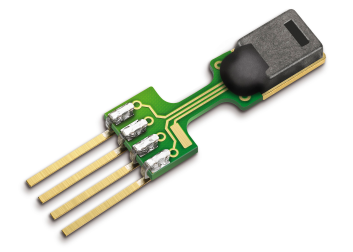
The more commonly used method in the sensor detection circuit is to take corresponding measures for the interference path and the receiving circuit to eliminate or weaken the noise interference.
By Panasonic 98
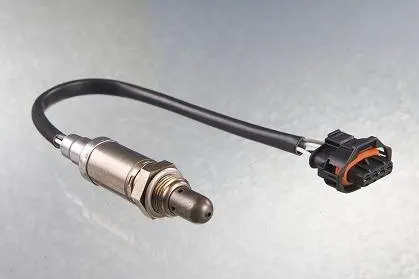
Texas Instruments, is a semiconductor multinational company in Texas, USA. It is famous for developing, manufacturing, and selling semiconductor and computer technology.
By Panasonic 168
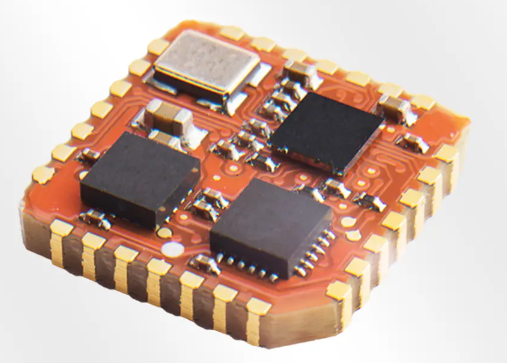
IMU is an inertial sensor that has emerged with the continuous development of sensor technology and microelectronics technology. It belongs to a type of MEMS and is a highly integrated technology.
By Panasonic 142

Proximity sensor is a general term for sensors that replace contact detection methods such as limit switches and are designed to detect without touching the detection object.
By Panasonic 283

The conductivity sensor is a sensor used to measure the conductivity of various solutions or the total ion concentration of water samples in laboratories, industrial production, and detection fields.
By Panasonic 248

Smart sensors are equipped with microprocessors, which have the ability to collect, process and exchange information, and are the product of the combination of sensor integration and microprocessors.
By Panasonic 94

Founded in 1918, Panasonic experienced a severe financial crisis in 2012 and has since undergone massive layoffs.
By Panasonic 104

Motion Sensors 3 mm diameter flat surface lens is possible using Panasonic’s unique Lens Formation Technology for silicon substrates, making the lens operating substantially small compared to othe
By Panasonic 217

The EVQV5 and EVQV6 series are two series of Panasonic's center space encoder line up.
By Panasonic 205

Panasonics' PIR Motion Sensors use Passive Infrared technology to detect movement.
By Panasonic 121

Panasonics' Grid-EYE infrared array sensor is a thermopile-typed infrared sensor which detects quantity of infrared ray.
By Panasonic 131

Panasonic's PNJ4K01F features a built-in photodiode and current amplifier circuit, this sensor also allows for automatic-control of display.
By Panasonic 128

Panasonic Saturn Lens PIR Sensors can detect standard motion in outer areas and slight motion in center areas of a space.
By Panasonic 82

Panasonic develops and produces PIR Motion sensors, which combine easy integration, high reliability, and environment-friendly materials.
By Panasonic 67

Panasonic introduces the “Wide Field of View” PIR motion sensor line extension to the existing EKMB and EKMC series lineups.
By Panasonic 101

Panasonic's Grid-EYE AMG8854M01 narrow-angle type offers a field of view of 35.6°, allowing the Grid-EYE Sensor to focus on closer objects.
By Panasonic 159

Panasonic's Grid-EYE infrared array sensor unit combines four Grid-EYE infrared array sensors to increase the detection area up to 3.8 m squared.
By Panasonic 115

Panasonic’s ERT-J series multilayer NTC thermistors are available in 0201, 0402, and 0603 case sizes in both standard and AEC-Q200 compliant versions.
By Panasonic 93