
By Purge Valve 3702
The Purge Valve is a key part of the Evaporative Emission Control System (EVAP). It controls the flow of fuel vapor from the charcoal canister to the engine intake manifold.
Its main job is to balance environmental needs (less hydrocarbon emission) and engine efficiency (reuse of fuel vapor).
It is usually placed inside the engine bay. It connects the charcoal canister and the intake manifold.
There are two common types: solenoid type (fast response and accurate) and diaphragm type (low cost but easy to age).
It is made of engineering plastic and metal coil that can resist high temperatures (over 130°C).
Comparison Table: Solenoid Type vs. Mechanical Type
| Feature | Solenoid Type | Mechanical Type |
| Control Accuracy | ±2% fuel flow error | ±8% fuel flow error |
| Lifespan | 100,000 open/close cycles | 50,000 open/close cycles |
| Vehicle Match | Electronic fuel injection system | Traditional carburetor vehicles |
Sticking valves cause 63% of all issues (industry report).
If the valve is always open, the air-fuel mix becomes too rich.
If it is always closed, fuel tank pressure becomes abnormal.
Burned solenoid coils are often caused by unstable voltage (normal working voltage is 12V ±15%).
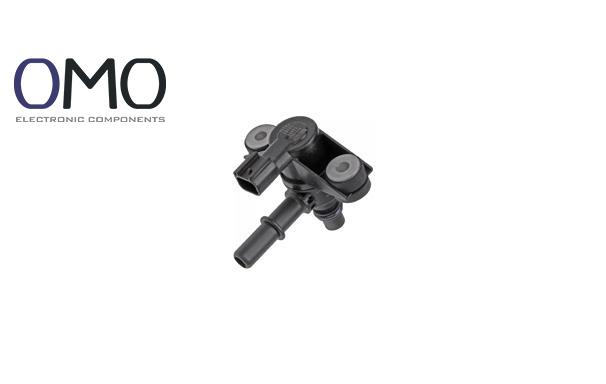
The Engine Control Unit (ECU) uses PWM (Pulse Width Modulation) signals (frequency 500Hz–2kHz) to control how much the valve opens.
For example, it opens 15%–20% at cold start.
At high speed and load, it opens up to 80% to match vapor flow with air intake.
To meet China VI B emission standards, the system must keep hydrocarbon emission under 20mg/km.
The purge valve helps reduce emissions by 38% (lab test data) through precise vapor control.
When working with the charcoal canister, the valve must deliver vapor within 15 seconds.
It operates under a pressure range of -0.5kPa to +3.5kPa.
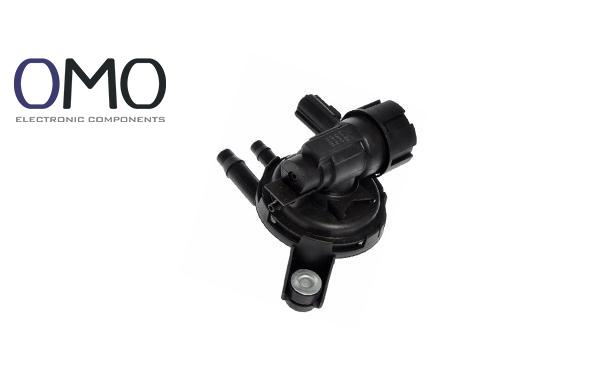
Key Operation Checklist
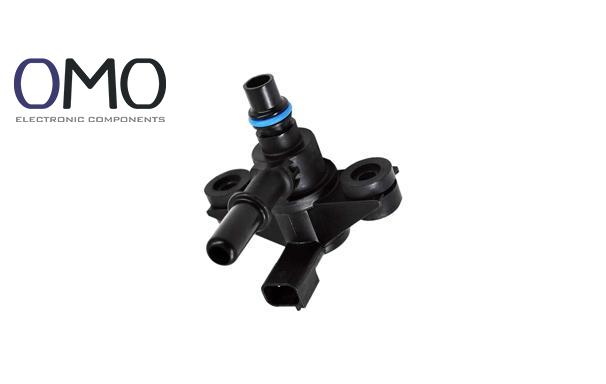
Apply -20kPa vacuum. If pressure drops ≤1kPa in 5 seconds, the valve is OK.
During smoke test, if leakage >30ml/min, replace the valve (safety limit from industry).
If oscilloscope shows signal issues, 90% of the time it means the solenoid coil is aging.
The purge valve regulates the transfer of evaporated fuel from both the fuel tank and charcoal canister to the engine, while additionally monitoring the EVAP (Evaporative Emission Control) system for potential leakage.
A purge valve, also known as a purge solenoid, is a mechanical component that manages the movement of vapors between systems. Its primary function involves alternately activating and deactivating to direct and contain gas transfer from specific compartments to designated locations.
Begin by gently detaching the wiring harness from the purge valve. Position the replacement purge valve precisely where the original component was located. Next, secure the fuel vapor hose onto the newly installed valve. Conclude the process by firmly reattaching the electrical connection until an audible click confirms proper engagement.
Prior to beginning any tasks, ensure the vehicle is turned off and has fully cooled. Apply an appropriate solvent to thoroughly coat the valve and its surrounding components. Once completed, reassemble the valve and securely reconnect all electrical connections.