
By Lithium Cell 3306
Technical Specifications and Features
Cross-Generation Compatibility Strategy
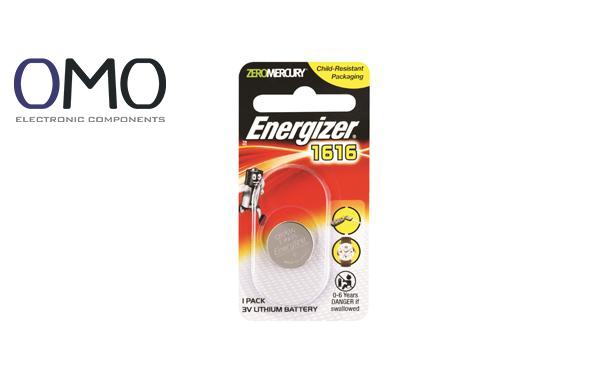
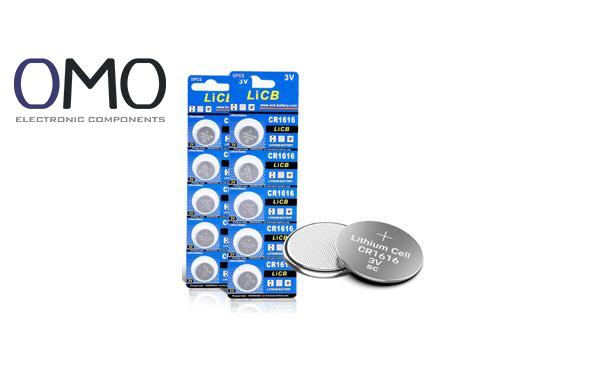
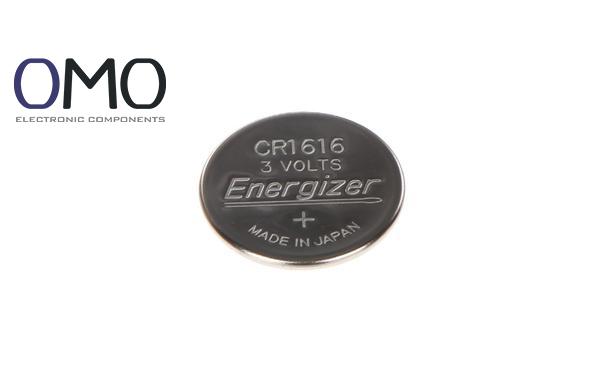
The CR1616 lithium battery is famous for its small size. It has a diameter of 16mm and a thickness of 1.6mm (about the height of two stacked coins). It fits many compact devices. With an ultra-light design of about 2 grams, it provides a capacity of 50-100mAh. The voltage curve shows a 3V nominal value that stays within ±0.1V for 90% of the discharge cycle. This performance is much better than the average level in the coin cell battery industry.
| Parameter | CR1616 Specification | Industry Average |
| Diameter × Thickness | 16×1.6mm | 20×1.6mm |
| Weight | 1.8-2.2g | 3.0-3.5g |
| Low-Temperature Performance | Usable at -20°C | Usable at -10°C |
Using a lithium manganese dioxide (Li/MnO₂) system, the battery keeps 85% of its nominal capacity at -20°C (see Figure 1). Test data show an annual self-discharge rate of only 0.8%, which is 60% lower than traditional alkaline batteries. A special electrolyte formula improves ion transfer efficiency by 15%. This supports continuous device operation for 800-1500 hours.
In smart wearable devices, the 3V output of CR1616 is a perfect match:
Compared to the CR2016 battery, the CR1616 is 20% thinner but maintains the same voltage platform. It helps products like TWS earbud charging cases save 2.3mm of space.
The CR1616, certified by IEC60086-4 (Medical Standard), runs stably in:
Extreme environment tests show that at 70°C, the battery works continuously for 200 hours. Its capacity loss is only one-third of regular products.
The lithium metal at the anode releases electrons and forms Li⁺ ions. The manganese dioxide (MnO₂) at the cathode captures electrons and forms LiMnO₂. A special doping (material mixing) process increases the porosity of the cathode to 35%. This speeds up lithium ion migration by 22% compared to the first-generation products.
In a low-current discharge mode of 10μA, the CR1616 shows:
Comparison tests show that in smartwatches, the CR1616 battery life is 18% longer than the CR1620.
Laminated sealing technology achieves:
Charging Warning: CR1616 is a primary (non-rechargeable) battery. Its energy density reaches 650Wh/L. Charging it by mistake may cause the shell to crack. When using batteries in parallel, it is suggested to keep the temperature difference between cells below 5°C to avoid performance imbalance.
During installation:
| Model | Capacity | Thickness | Suitable Scenarios |
| CR1616 | 75mAh | 1.6mm | Ultra-thin devices |
| CR1620 | 90mAh | 2.0mm | Regular wearable devices |
| CR2016 | 100mAh | 1.6mm | Large diameter devices |
When upgrading devices, it is suggested to:
The CR1616 is a popular disposable lithium button cell with a nominal voltage of 3 volts.
CR1616 batteries are not recommended as substitutes for CR1632 batteries. This is because their differing energy storage capacities and lower internal resistance enable CR1616 batteries to deliver a higher peak current, which may lead to potential safety risks.
The CR1616 coin cell battery is widely utilized in numerous compact electronic applications, including but not limited to remote controllers, cardiac monitors, timekeeping devices like clocks and watches, IoT-enabled wearables, healthcare instruments, and particularly serves as the designated power source for Honda automotive key fobs.
The CR1616 battery can be directly replaced by alternative models such as BR1616, DL1616, and ECR1616, as these share similar dimensions, voltage output, and functional characteristics. These substitutes generally work seamlessly in devices designed for CR1616 batteries. Nonetheless, verifying compatibility through the device's technical requirements remains crucial before substitution.